Black Friday: Annual E-commerce Turnover in the Baltics Reaches Tens of Billions of Euros, with Lithuania Leading in Exports
November 29, 2024
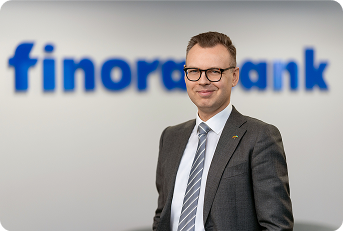
Black Friday has become more than just a symbol of mass shopping—it also presents a significant opportunity for businesses to assess the potential of the e-commerce market. An analysis by Finora Bank reveals that Lithuania stands out for its strong growth in e-commerce exports and is one of the fastest-growing countries in the Baltic region in this sector.
“E-commerce in Lithuania has experienced remarkable growth over the past decade. According to the latest Eurostat data, e-commerce accounted for approximately 16% of total business turnover in 2023, amounting to €24 billion,” notes Vaidotas Šumskis, economist at Finora Bank.
Trends in the e-commerce sector
Lithuanian companies receive and process orders through various channels, including their own websites and apps, online marketplaces such as Amazon, eBay and Pigu.lt, and electronic data interchange (EDI) systems, which are most commonly used by large retailers.
“Compared with businesses in the other Baltic countries, Lithuanian companies make greater use of international marketplaces such as Amazon and eBay,” says Šumskis. “In Estonia, EDI systems generated the largest share of e-commerce turnover in 2023, accounting for 8% of total business turnover. Websites and apps accounted for 7.4%, while online marketplaces contributed just 0.2%. The situation in Lithuania was different: websites and apps generated the largest share of orders, at 5.9%, followed closely by EDI systems at 5.4%. As much as 4% of total turnover—or €6.3 billion in sales—was generated through international marketplaces. “Particularly rapid growth in online marketplace sales was recorded immediately after the COVID-19 pandemic. In 2020, sales through international marketplaces accounted for 1.7% of total turnover, rising to 4.4% in 2021. It could be said that Lithuanian businesses responded to the pandemic particularly creatively. Today, they benefit from larger and more diversified sales streams, which have every opportunity to continue growing,” Šumskis comments.
Who are e-commerce customers?
Most online sales are made not to individual consumers, but to businesses.
“Business orders account for 79% of all e-commerce sales in Estonia, 71% in Latvia and 72% in Lithuania. Households account for the remaining 21% in Estonia, 29% in Latvia and 28% in Lithuania. In financial terms, this means that consumers in Lithuania and other countries spent €6.8 billion online on goods sold by Lithuanian companies in 2023. In Estonia and Latvia, individual consumers spent €3.3 billion and €2.6 billion respectively,” explains the bank’s representative.
Lithuania is the strongest e-commerce exporter in the Baltics
Lithuania has the largest export share in Baltic e-commerce, with exports generating as much as 42% of the sector’s turnover.
According to Šumskis, Lithuania’s success in exports is driven by the active participation of its businesses in international marketplaces such as Amazon and eBay.
“Domestic sales account for 69% of total e-commerce turnover in Estonia and 68% in Latvia, compared with 58% in Lithuania. Lithuania therefore stands out, with e-commerce exports accounting for 42% of the sector’s turnover, compared with 31% in Estonia and 32% in Latvia. On the one hand, this demonstrates the competitiveness of Lithuanian businesses in international markets. On the other, it reflects their ambition to find new markets rather than rely solely on the relatively limited demand from domestic consumers,” the economist explains.
The fact that exports account for 42% of Lithuania’s e-commerce turnover demonstrates not only the growing international potential of Lithuanian businesses, but also their ability to compete with companies from much larger economies.
Regional differences and future opportunities
Lithuanian small businesses compete actively in international markets, creating significant added value for the economy. Export growth is one of the country’s strongest drivers of economic expansion.
“Last year, e-commerce accounted for 16% of total business turnover in Lithuania. Compared with other countries, we were slightly below the EU average of 18% and further behind the Nordic countries, where e-commerce represented between 22% and 29% of business turnover. However, rising household incomes, technological progress and international marketplaces point to significantly greater potential for the sector in the future,” Šumskis emphasises.
Black Friday and its growing popularity also demonstrate that e-commerce is becoming an integral part of everyday shopping habits. Lithuania, already the Baltic leader in this field, clearly shows that e-commerce can not only increase domestic sales, but also open access to vast international consumer markets and become an important tool for export growth. Moreover, the expansion of e-commerce has a positive impact on related industries, including postal, delivery, transport and warehousing services. It also creates new jobs and contributes to higher productivity and wage growth across these sectors.
Related articles

Lithuania vs. Estonia: The Race for IT Leadership in the Baltics
Vaidotas Šumskis, Chief Analyst at Finora Bank Lithuania and Estonia have been competing in the IT sector for a long...
Read more

Small Trends Signs Point Estonia’s Progress
Although Estonia’s economy is no longer shrinking, it has yet to return to growth. However, signs such as recovering investments...
Read more
Lithuanian Business at a Turning Point: Will the Economy Pick Up Speed?
Vaidotas Šumskis, Chief Analyst at Finora Bank The Bank of Lithuania’s latest quarterly report offers some encouraging news: the country’s...
Read more