Rapid growth is not enough: what challenges arise after obtaining a specialised bank licence?
September 10, 2026
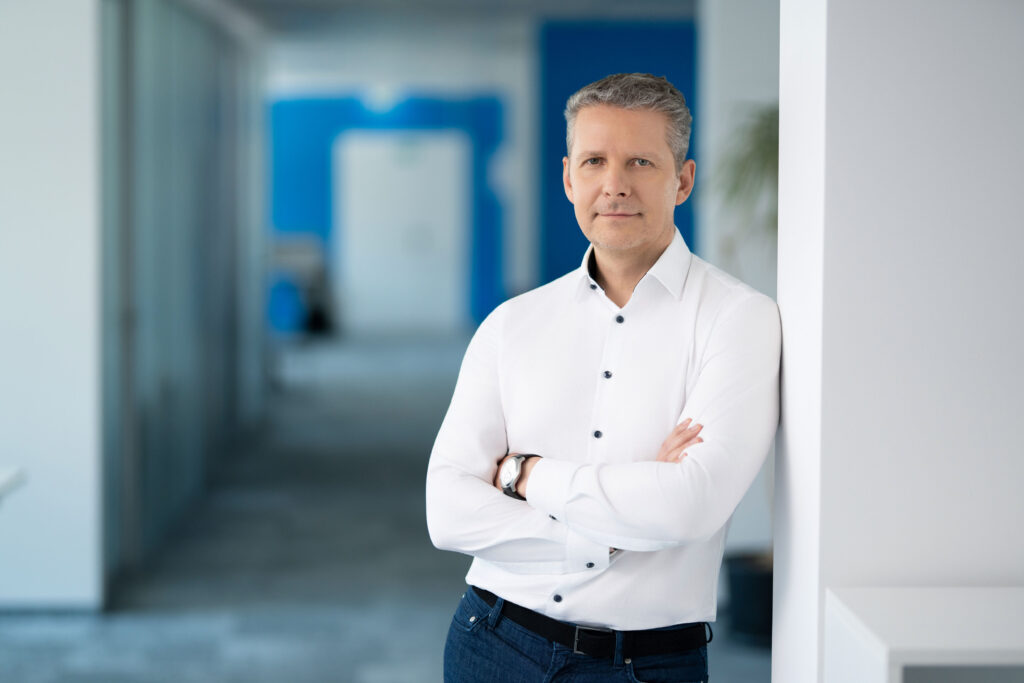
For companies operating in the financial sector, a banking licence can open the door to faster growth, a broader range of services and new markets. However, obtaining one also raises the regulatory bar significantly. Although specialised banks are typically smaller than market leaders, they are subject to the same capital, risk management, compliance and security requirements. Šarūnas Ruzgys, CEO of Finora Bank, shares his insights into the challenges faced by specialised banks and explains why rapid growth can become a new test for an organisation.
From a fintech to a bank: a licence marks only the beginning of the journey
Over the past decade, Lithuania’s financial technology sector has grown rapidly. For some fintech companies seeking to expand their business model, funding sources and range of services, obtaining a banking licence has become a strategic step.
“Looking back at the beginning of our journey, we chose the specialised bank model because we saw a clear and persistent problem: limited access to finance for small and medium-sized enterprises (SMEs). This issue was already relevant in Europe and the Baltic states a decade ago, and it remains important today. A European Central Bank survey published this summer showed that SMEs’ access to bank loans continued to deteriorate slightly in the second quarter of 2026, while the gap between demand for and availability of financing widened,” says Šarūnas Ruzgys.
Specialised banks can make decisions faster, assess the circumstances of individual businesses more flexibly and serve companies that remain outside the focus of major banks. However, the CEO of Finora Bank notes that this is precisely where a paradox emerges: a bank must act flexibly and quickly in the market while maintaining exceptional discipline internally.
“We obtained our banking licence in 2022, eight years after establishing the fintech company in Estonia. The process was not straightforward: we had to prepare an extensive volume of documentation, establish all the necessary processes and demonstrate that we were ready to implement them in practice. However, once the licence is granted, the real work is only beginning. You need to attract customers, conduct operations and continuously verify whether every part of the system can withstand the demands of day-to-day business. At the same time, further expansion must be carefully modelled by assessing the capacity that will be required, the reserves that must be accumulated and the level of costs the organisation can afford. Financial discipline is an integral part of sustainable growth and of meeting commitments to shareholders,” says Ruzgys.
Regulatory discipline remains essential when adapting to different stages of growth
According to the CEO of Finora Bank, close dialogue with supervisory authorities is essential in a regulated market. It helps identify areas for improvement more quickly and assess whether the organisation’s processes, documentation and overall approach meet supervisory expectations.
“Every financial institution must find the most appropriate ways to implement regulatory requirements within its particular business model. This depends on the technological solutions it has chosen, the expertise of its team and its overall strategy. We therefore maintain consistent cooperation, take the recommendations we receive into account and systematically fulfill our commitments by strengthening risk management and our technological infrastructure, including completing the implementation of our new core banking system. Ultimately, the objective is shared: to ensure that the bank operates safely, sustainably and in a balanced manner,” says Šarūnas Ruzgys.
He adds that, particularly during the first few years, an organisation must respond quickly to change and adapt to different stages of growth. While bolder decisions may be needed at the beginning, processes must later be stabilised, tested and, where necessary, adjusted without delay. This applies both to technology and to the planning of internal resources.
Growth depends not only on customer numbers, but also on the capital raised
Many new businesses need several years before their initial investments begin to pay off. In banking, this journey can take even longer, as operational capacity and regulatory compliance must be ensured from the very first day. Consequently, a significant share of costs is incurred before a bank achieves greater scale.
“The profitability of a specialised bank depends on more than its ability to attract customers and issue more loans. The demand for SME financing is real, so there is no shortage of opportunities to grow a loan portfolio. The year 2025 was a record one for us: our net loan portfolio more than tripled, while income increased by 141%. From a business perspective, such growth confirms the potential of our operating model. From a regulatory perspective, however, it may lead to more cautious decisions and stricter requirements,” says Ruzgys.
The CEO of Finora Bank explains that, following a period of rapid expansion, the organisation is currently placing greater emphasis on improving operational efficiency.
“Considering the pace of growth in the recent period, the size of our loan portfolio and, of course, the possibility of facing additional operational risk challenges, we have agreed with the supervisory authority to maintain higher capital buffers. To create the greatest value for our shareholders, we plan to focus in the near term on our core business areas: everyday banking and business lending. A clearer focus will allow us to reduce technological and regulatory complexity, manage internal resources more efficiently and make better use of our key strength: the ability to respond quickly and flexibly to the financing needs of business customers,” explains Šarūnas Ruzgys.
Future plans include expansion and a return to a growth trajectory
According to the CEO of Finora Bank, the strength of a specialised bank lies in its ability to operate more quickly, remain closer to its customers and address market gaps more precisely, while adhering to the same regulatory principles.
“Building a bank is an exciting but certainly demanding challenge. Obtaining a licence requires an enormous amount of work, but it is only the beginning of the journey. What follows is extensive oversight, continued investment, capital raising and the constant need to balance growth with efficiency. The true test of financial discipline begins not when an organisation is benefiting from favourable conditions for growth, but when the growth curve flattens and its structure, costs and priorities must be reassessed. Such stages allow an organisation to become stronger and prepare for the next phase of sustainable growth,” says Ruzgys.
According to him, Finora Bank’s loan portfolio will remain stable this year, but its long-term ambitions have not changed. Its future plans include not only further expansion across the Baltic states, but also embedded finance and Banking-as-a-Service solutions for partners and fintech companies that require infrastructure and access to financing.
The article has been published on VŽ.lt
Finora Bank is a specialised bank serving small and medium businesses in Lithuania and Estonia. It obtained its banking licence from the Bank of Lithuania in 2022. The bank provides financing solutions tailored to the individual needs of companies, as well as everyday banking services. In 2025, Finora Bank recorded its strongest growth to date, with its net loan portfolio more than tripling over the year. It currently stands at EUR 94.3 million.
Related articles

A Rapid Drop in Euribor Could Be a Lifeline for Thousands of Estonian SMEs
Access to financing has long been a challenge for Estonia’s small businesses, creating a significant bottleneck for economic growth. However,...
Read more
Finora Bank’s economist: a challenging year ahead, but three new opportunities for Estonia’s SMEs
Despite uncertainty ahead, Finora Bank economist Vaidotas Šumskis sees reasons for optimism. Recovering purchasing power, Finland’s economic rebound, and rising...
Read more

Neobanks: Trend, Revolution, or an Investment Opportunity?
A decade ago, business banking was inseparable from branch visits, face-to-face consultations, lengthy processes, and paper contracts. Today, many companies...
Read more